Saturday, March 2, 2013

Eyeing the Le Tour de Langkawi 2


MNCF against LTdL transfer

THE Malaysian National Cycling Federation (MNCF) will not agree to any transfer of Le Tour de Langkawi's ownership or organisational rights to a third party.
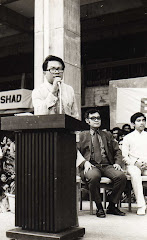
MNCF president Datuk Abu Samah Wahab said the national body's executive committee is unanimously firm in its decision.

This comes after a TimeSport report in which Sports Minister Datuk Seri Ahmad Shabery Cheek confirmed that Human Voyage Sdn Berhad, the company that organises the Langkawi International Mountain Bike Challenge (LIMBC) had made an official request for the takeover to the ministry.
Human Voyage is chaired by former cyclist Datuk Malik Mydin, famously remembered for being the first Malaysian to swim across the English Channel.

Ahmad Shabery, however, said the ministry will make a decision based on the evaluation of the latest edition of the race, which ends in Kuala Terengganu today.

The request, which included a proposal, was for the company to take over the organisation of the UCI 2.HC LTdL from next year.

"Our exco has made its stand and we are serious about this.

"Since 2007, LTdL's registration has been under the MNCF and we've not only jointly organised the race with the Sports Ministry and National Sports Council (NSC), we've saved it and done a good job at it," said Abu Samah.

"We've received awards from the International Cycling Union (UCI) recognising the level of organisation as excellent, which not many other races have achieved.

"The government has been funding it, but the registration is MNCF's right.

"So we do not agree with the race organisation being handed to a private company just like that."
The LTdL is one of Asia's biggest cycling events, but has gone through a troubled past, namely the 2005 and 2006 editions which saw the race ravaged by mismanagement of sponsorship funds and non-payment of dues to contractors and suppliers under the now wound-up former organiser First Cartel Sdn Berhad.
"When First Cartel changed hands in 2004, it was sold by Datuk Wan Lokman Wan Ibrahim to Simon Donnellan.

"It was then a private company which held the rights to organise the race. But since they failed, the rights were handed over to MNCF," said Abu Samah.

"So, if we look at it that way, any company wishing to take over LTdL's organisation will have to buy over MNCF.

"But I'm sorry, the MNCF is not for sale. We intend to keep the rights as the federation's and whoever takes over as president after me will have to ensure that it remains so."

Eyeing the Le Tour de Langkawi 1


CYCLING / LE TOUR DE LANGKAWI: New organiser for race?
AFTER 18 editions, Le Tour de Langkawi's (LTdL) history could see another twist with private company Human Resource Sdn Berhad said to be interested in organising the event.
Human Resource is the organiser of the Langkawi International Mountain Bike Challenge (LIMBC) and is led by English channel swimmer Datuk Malik Mydin.

But it won't be a swiftly done deal, especially with the LTdL looking stabilised after several years of uncertainty.

The LTdL organisers have announced key improvements, particularly in terms of funding and recognition from the sport's governing body this year, which is the third year of the race being organised by the ministry with the National Sports Council (NSC) and Malaysian National Cycling Federation (MNCF) the co-organisers.

With corporate sponsorship making up half of the RM15 million total budget compared to a fully government-funded race three years ago, a change in organisation is something Sports Minister Datuk Ahmad Shabery Cheek wants to evaluate before making his stand.

 Ahmad Shabery did, however, confirm that there is a serious bid to take over the race.
  "Yes, we have received a request from a third party to take over the running of LTdL, from Human Voyage Sdn Berhad of which Datuk Malik Mydin is the chief executive officer," said Ahmad Shabery when contacted yesterday. "However, it is too early for us to decide. We want to see how the present organisation works in this edition of the race and then make an evaluation."

Malik, when contacted, said he reserved his comments on the matter until there is a confirmation.
 
LTdL began in 1996 under the organisation of First Cartel Sdn Berhad, which saw the race grow from a then UCI 2.6 status race to a 2.HC (hors category or top tier of the continental calendar) status race by 2005 when the International Cycling Union's (UCI) global cycling reform took effect.

The ownership of First Cartel changed hands in 2004, from Datuk Wan Lokman Wan Ibrahim to Simon Donnellan @ Imran Abdullah, who ran the race in 2005 and 2006.

Those two years saw the demise of the race, eventually leading to an RM10.7 million debt, which saw First Cartel wound up and the sports ministry stepping in with a bail-out package to save the race in time for the 2007 edition which was run by the Malaysian National Cycling Federation (MNCF).
 
MNCF's first two years in charge saw the national body balance between funds for the running of the race and the settlement of a huge list of creditors owed payments from the 2005 and 2006 editions, which when settled saw the sports ministry taking full charge of the organisation of the race in 2010.
  Over the past three years, the race began to be rebuilt again, with this year's edition moving up a step with the attraction of what is touted as the strongest field ever to feature in the race with five UCI Pro Teams taking centre stage.

Saturday, August 11, 2012

Eyeing the London Eye


LONDON EYE: Corporate funding should move away from glamour sports

By VIJESH RAJ 0 comments

FOR Tun Ahmad Sarji Abdul Hamid, the London Olympics have been a revelation and he hopes the Malaysian corporate sector feels the same way too.
The exploits of Lee Chong Wei, Pandelela Rinong and Azizulhasni Awang, among others, have united Malaysians and Ahmad Sarji wants the corporate sector to also actively get involved in developing Malaysian sports.
The British corporate sector, said Malaysian chef-de-mission Ahmad Sarji, doesn't pick and choose when it comes to sponsoring sports and this is something that Malaysian companies can emulate.
"I really hope that the corporate sector in Malaysia is inspired by the London Olympics and gets involved in more sports, rather than just focusing on the glamour sports," said Ahmad Sarji.
He praised Sime Darby Foundation for its sponsorship of athletes from the so-called minor sports, saying its scholarships had helped athletes from the Malaysian Malays Cricket Association (MMCA) to pursue their studies abroad.
Ahmad Sarji is the president of the MMCA.
CIMB is also actively involved in grassroots development but the majority prefer to associate themselves with football and badminton, leaving the government -- through the National Sports Council -- to fund the other sports.
Already, the NSC is preparing to answer questions that are bound to come its way following the failure to win an Olympic gold medal yet again.
Sports Minister Datuk Seri Ahmad Shabery Cheek said in Kuala Lumpur on Thursday that RM20 million had been spent on the Road to London programme and critics will say that it is a lot of money to spend on a haul of one silver and one bronze.
Malaysia, though, has to continue spending if sporting excellence is to be achieved and to put things in perspective, the British cycling, athletics and swimming associations each received about STG25 million   (RM125 million) in the four-year buildup to the Olympics.
The investment in cycling and athletics paid off with multiple medals won but swimming failed to deliver even one gold medal.
Taxpayers, however, had no reason to complain as the money came from British Lottery and the funding, after a review, of course, will continue.
Malaysia should also strive to do the same as the government can't go on funding development programmes forever.
We have several major companies with tie-ups with foreign football clubs and it will be a step in the right direction if some of these funds are used to develop local athletes.
Football may be the glamour sport but requires huge investments for a shot at just one Olympic medal. Won't it be better if the huge amounts spent on football be channeled to diving, which offers eight gold medals in the Olympics, for more athletes to be developed?
Ahmad Sarji believes so,  and one can only hope that the wisdom of his words and the inspiring performances of Chong Wei and Pandelela see a paradigm shift in Malaysia's corporate sector.


Read more: LONDON EYE: Corporate funding should move away from glamour sports - Other - New Straits Times http://www.nst.com.my/sports/other/london-eye-corporate-funding-should-move-away-from-glamour-sports-1.123616#ixzz23DDoVdXY

Wednesday, August 8, 2012

Eyeing the Jason Kenny and Azizulhasni's duel at the track

Mohd Azizulhasni Awang of Malaysia making his move

Monday, May 21, 2012

Jelajah Malaysia 2012


Tuesday, January 3, 2012

Friday, November 18, 2011

Eyeing the Indonesian 26th SEA Games 2011

12 November 2011 | 21:12

Datuk Naim Mohamad

"Indonesia Bakal Sukses"


KONTINGEN Malaysia mengerahkan 891 atlet di SEA Games XXVI. Membidik 45 medali emas dari 38 cabang olahraga, mereka menjagokan Indonesia.

Hal itu diungkapkan Chief de Mission Malaysia Datuk Naim Mohamad kepada sportiplus.com di Situ Cipule, Karawang, Jawa Barat. Ia mengakui Indonesia sebagai kekuatan yang luar biasa di Asia Tenggara dan diyakini bakal tampil sebagai juara umum.

Berikut kutipan wawancara dengan Datuk Naim.

Bagaimana Anda melihat penyelenggaraan SEA Games XXVI?
Ya, ini kali pertama Indonesia menggelarnya di dua kota. Tentu tak gampang bagi Indonesia mengatur segala aspek dan fasilitas yang dibutuhkan. Tapi, saya melihat semua progres berjalan baik meski ada beberapa kekurangan di sana-sini. Terutama kelengkapan persyaratan venue, fasilitas, dan persiapan sarana media.

Kontingen Anda merasa tak nyaman?
Tentu tidak. Pelayanan yang diberikan tuan rumah kepada para tamunya, termasuk Malaysia, sudah cukup baik. Saya yakin Indonesia punya sumber daya manusia yang bisa diandalkan. Dan, saya yakin Indonesia akan sukses sebagai penyelenggara.

Seberapa besar kekuatan kontingen Malaysia?
Kami datang dengan 891 atlet dan ofisial. Kami tampil di 38 cabang olahraga. Kami tak ikut ambil bagian di cabang dragon boat, fin swimming, wrestling, vovinam, dan soft-tennis. Kami datang dengan misi ganda. Sebanyak 16 cabang diproyeksikan hanya sebagai menimba pengalaman. Sisanya pada sasaran prestasi menuju Olimpiade 2012 dan Asian Games.

Target yang dicanangkan?
Kami tak muluk-muluk. Kami cukup tahu diri melihat kekuatan yang kami miliki. Kami hanya membidik 45 medali emas. Target itu realistis karena kami menurunkan atlet yunior, sedangkan atlet senior lebih fokus pada persiapan Olimpiade 2012. Kami tak membawa atlet kelas dunia seperti di cabang bulutangkis, equestrian, dan balap sepeda seperti Azizul Hasni Awang. Atlet terbaik kami lainnya juga absen seperti Lee Hup (loncat tinggi) karena cedera, perenang seperti Daniel Bego yang menyambar lima medali emas pada SEA Games lalu. Tapi, Kami berharap di beberapa cabang terukur dapat memecahkan rekor nasional.

Cabang olahraga apa yang diandalkan Malaysia?
Akuatik diharap jadi kontributor medali terbesar dengan 14 emas dari cabang diving, renang, synchronise, dan polo air. Kemudian juga balap sepeda (5 emas), panahan, dan atletik masing-masing empat emas. Menembak, karate, dan boling masing-masing tiga medali emas. Silat, wushu, layar, tinju, dan sepakbola meski agak sulit, kami tetap targetkan emas.

Dua tahun lalu di Laos, timnas U-23 Malaysia menyambar medali emas. Bagaimana Anda mempertahankannya?
Tentu tidak mudah. Kami berada di grup maut bersama Indonesia, Thailand, Singapura, dan Kamboja. Thailand telah 13 kali juara, Indonesia dua kali juara, dan kami lima kali. Indonesia salah satu kandidat juara. Mereka tampil di negeri sendiri dan saya melihat penampilan mereka ketika melawan Kamboja. Tim sepakbola kami yang dilatih Ong Kim Swee butuh perkembangan. Tapi, kami akan berusaha mempertahankan medali emas yang kami raih di Laos.

Monday, November 7, 2011

Eyeing foods that lower high blood pressure

5 Powerful Foods that Lower Your Blood Pressure

Are you eating enough of these 5 amazing foods that help reduce high blood pressure?

by Frank Mangano
Consumer Health Advocate
Author of the popular book:
Blood Pressure Miracle

Did you know that stroke and coronary heart disease still remain to be on the list of the top three main causes of death in the USA? It's time to take your health seriously so you don't fall victim to these!

What is High Blood Pressure and how does this come into play?

According to the National Institute for Health, blood pressure levels of 140/90 mmHg or more can be classified ashypertension.

The worst part about having high blood pressure is that the condition can sometimes be present without any symptoms and before we know it, the damage is already extensive. Serious problems that have been associated with high blood pressure include kidney failure, heart attack, heart failure and stroke.

What are the Risk Factors Associated with High Blood Pressure?

Blood pressure can be influenced by a lot of factors – age, race, family history, tobacco use, sedentary lifestyle, diet, binge drinking, and stress levels. Chronic conditions such as sleep apnea, diabetes and high cholesterol levels can also precipitate the development of hypertension.

What can You Do to Lower Blood Pressure?

You don't need potentially dangerous drugs to control and reduce your blood pressure. Controlling blood pressure levels could be as simple as doing lifestyle modifications and eating healthier.

If you are a smoker, quit. If you drink heavily, try to practice self-control. At work, take the stairs instead of the elevator. And if you have been obsessed with sweet, sugary foods as well as processed fast-food meals, then modify your eating habits as well. Learn to eat the right kinds of food before it's too late.

Below are 5 of my top picks for powerful foods that could help you lower your blood pressure levels:

artichokes help lower blood pressure1. Artichokes

The use of artichokes has been implicated in the lowering of cholesterol levels in the blood. Since hypercholesterolemia is one of the risk factors for high blood pressure, this information is actually good news. Three clinical trials conducted separately by Dr. Barbara Wider supports this fact. In Cochrane Database of Systemic Reviews’ October 2009 issue, where the result of the study was published, it was shown that patients who were diagnosed with hypercholesterolemia and given Artichoke leaf extract exhibited a decrease in their blood cholesterol levels.

Artichokes taste amazing steamed (generally steam for about 1 hour) and then dip each piece into a mixture of olive oil, grass-fed butter, and garlic. Delicious!

bananas cut high blood pressure2. Bananas

A study published in The New England Journal of Medicine says that incorporating bananas in your day-to-day meals can actually cut stroke-related deaths by as much as 40 percent. A 1997 study at Johns Hopkins University recommended eating at least five bananas daily to achieve the desired effect, and that is to lower elevated blood pressure levels. However, a study conducted by Indian researchers at the Kasturba medical college revealed that people who eat two bananas a day, for one whole week, can lower their blood pressure levels by 10 percent.

Bananas are rich in potassium, which is responsible for the proper functioning of the heart. It works with sodium to maintain balance of the body’s fluids, which is an important factor in the regulation of blood pressure.


compounds in beets beat blood pressure3. Beets

A research study conducted by scientists from Barts and The London School Medicine revealed that simply drinking one 500 ml glass of beetroot juice each day can produce astounding health benefits, especially to the heart.

Beetroot juice has been found to lower high blood pressure levels. Professors Amrita Ahluwalia and Ben Benjamin, from the William Harvey Research Institute and Peninsula Medical Center, respectively, led the research efforts, which revealed that the consumption of dietary nitrate that is found in beetroot has BP-lowering effects in as fast as 1 hour after ingestion, with the effect lasting for up to 24 hours. The result of the study was published in the March 2008 issue of Hypertension.

You can try beetroot juice, or also try baked beets sliced on salads or as a side dish to dinner.


cocoa helps lower blood pressure4. Cocoa

A study conducted by researchers from Germany’s University Hospital of Cologne revealed that cocoa can significantly lower high blood pressure levels. Study results were published in the Archives of Internal Medicine. The beneficial heart effects of cocoa are attributed to its flavonoid content, specifically procyanids.

Because cocoa is most commonly found in chocolate, people falsely assume that eating a lot of chocolate could be good for the health. Keep in mind that cocoa in chocolates have undergone a lot of processing, and it has been mixed with loads of sugar, so this is not totally healthy. The best way to take advantage of the health benefits offered by cocoa is to choose raw cacao – it is good for the heart, the brain and the liver. Raw cacao nibs go great in smoothies! Also use organic cocoa powder in smoothies or homemade hot cocoa sweetened with stevia instead of sugar.


garlic fights hypertension5. Garlic

Researchers from South Australia’s University of Adelaide have conducted studies, which provide solid proof that the consumption of garlic can indeed help lower elevated blood pressure levels. Garlic supplements in powder form were given and results revealed that it produced a reduction in systolic blood pressure. Garlic has been known all over the world as a very important herb, especially with its heart-protecting capabilities. It helps lower blood cholesterol levels and prevents blood from forming clots (which could lead to heart attack and stroke).

Furthermore, the Proceedings of the National Academy of Sciences journal has published the results of a laboratory test showing how garlic juice can lead to a decrease in blood pressure levels. Eating the equivalent of 2 cloves of garlic each day can significantly contribute to the health of the heart.

Check this out to discover over 37 additional herbs, spices, and powerful foods that KILL high blood pressure.

Saturday, November 5, 2011

Eyeing Raja Zarith Sofia's message


RAJA ZARITH IDRIS (Sultanah of Johore)

-My Running Deer (animated) Friends,

________________________________________________________________

Season of goodwill
MIND MATTER by RAJA ZARITH IDRIS (Sultanah of Johore)


If Christmas is the celebration of the birth of Isa (Jesus), a prophet respected and revered in Islam, is it so wrong to wish a blessed day for those who celebrate it?

DURING the days before Christmas last year, I wished my friends who were celebrating it "Merry Christmas" in much the same way they would wish me "Selamat Hari Raya" or "Happy Eid".

I find it rather sad that such a simple greeting – one which I grew up with and which I have never regarded as something that would compromise or de-value my own faith – is now regarded as something so religiously incorrect for us Malaysian Muslims.

When I was at boarding school in England , I had to go to church every Sunday because it was part of the rules. My father advised me to consider it as part of my "education" and he had no doubt that the experience would strengthen rather than weaken my own faith.

I was able to see the similarities and differences between Christianity and Islam. I learned more than the average Malaysian Muslim would about Christianity. I learnt that just as we Muslims categorise ourselves according to the four different schools of thoughts of the four Imams (Imam Malik, Imam Al Shafi, Imam Abu Hanifa and Imam Ahmad Abn Hambal) and are either Sunnis or Shias, so Christians too are divided into different sects or churches.

Going to church did not make me less of a Muslim when I was a young girl, and neither does saying "Merry Christmas" make me less of a Muslim now. My faith has not been shaken just because I wished some friends a time of joy with their families. Neither will I suddenly suffer from amnesia and forget what my religion is.

What I do not wish to forget, however, is that there are good, kind people who are not of the same faith as me.

As Harun Yahya, the Turkish writer (he was selected last year as one of the 500 most influential Muslims in the world by the Royal Isla mic Strategic Studies Centre of Jordan ) noted:

"Islam is a religion of peace, love and tolerance".

Today, however, some circles have been presenting a false image of Islam, as if there were conflict between Islam and the adherents of the two other monotheistic religions. Yet Islam's view of Jews and Christians, who are named `the People of the Book' in the Quran, is very friendly and tolerant.

"This attitude towards the People of the Book developed during the years of the birth of Islam. At that time, Muslims were a minority, struggling to protect their faith and suffering oppression and torture from the pagans of the city of Mecca . Due to this persecution, some Muslims decided to flee Mecca and shelter in a safe country with a just ruler. The Prophet Muhammad told them to take refuge with King Negus, the Christian king of Ethiopia . The Muslims who followed this advice found a very fair administration that embraced them with love and respect when they went to Ethiopia . King Negus refused the demands of the pagan messengers who asked him to surrender the Muslims to them, and announced that Muslims could live freely in his country.

"Such attitudes of Christian people that are based on the concepts of compassion, mercy, modesty and justice, constitute a fact that God has pointed out in the Quran."

I do not wish to be a self-centred Muslim who expects friends of other faiths to wish me Selamat Hari Raya or, for those who are not Malaysians and therefore do not know about Hari Raya, a Happy Eid and yet do not return their goodwill when it is Christmas, Chinese New Year, Deepavali or Vesak Day.

Every year, friends who are Christians, Buddhists, Hindus, Sikhs or those without any faith come to our home to celebrate Hari Raya with us. They do so with sincerity and as a mark of respect for one of the most important days in the Muslim calendar. Why should we not reciprocate their kindness, show them the same mark of respect for their religion and wish them the same joy on their holy days of celebration?

An Isla mic scholar and lecturer also reminded me that as Muslims we must remember the importance of both the five Pillars of Islam and in the six Pillars of Iman (Faith), which are:

Belief in Allah;

Belief in the angels;

Belief in the revealed Books (which include the Bible, the Torah and the Holy Quran);

Belief in the Prophets (May Peace be Upon Them);

Belief in the Resurrection and the events of Kiamah, the Day of Judgement; and

Belief in the predestination (Qada' and Qadar) by Allah in all things.

The prophets include not just Muhammad (May Peace Be Upon Him) as the last prophet and as the Messenger of Islam, but also in the 24 earlier ones who are mentioned in both the Bible and the Quran. Four of them are Ibrahim (Abraham), Musa (Moses), Daud (David), and Isa (Jesus).

So, if Christmas is the celebration of the birth of Isa (Jesus), a prophet respected and revered in Islam, is it so wrong to wish a blessed day for those who celebrate it?

We are now in the second decade of the 21st century. Surely, we should, now more than ever, be far more enlightened at a time when information of any sort and of all kinds are so readily available to us.

What is most important is that we regard one another as fellow citizens and treat each other with respect, regardless of our race or religion.


The writer is Royal Fellow, School of Language Studies and Linguistics, Universiti Kebangsaan Malaysia (UKM), and holds a BA (Honours) degree in Chinese Studies, University of Oxford .


[The writer is also the current Sultanah of Johor]

Tuesday, November 1, 2011

Eyeing the other side of Gaddafi

HOW MUCH OF THIS IS TRUE?
The international media, influenced by the Americans, has successfully painted Gaddafi as a hard-core dictator, tyrant or whatever you want to call him. However, the media as usual has also failed to show the kind, giving Gaddafi we never heard of. Gaddafi unlike most dictators has managed to show his humane side, the very side we dream of seeing in other dictators. I consider Libyans lucky to a certain extent and one wonders with the new democratic rule they cry for will it improve or worsen life for them. Yes, Gaddafi has spent millions of Libya`s money on personal ventures but is the average Libyan poor? We know others who take a country and destroy it until you feel like there is no hope of restoring this country… looting some prefer to call it. Did Gaddafi loot Libya in any way?
Now let us get to the unknown facts about the Libyan dictator Muammar Gaddafi:
image001.jpg
1. There is no electricity bill in Libya; electricity is free for all its citizens.
2. There is no interest on loans, banks in Libya are state-owned and loans given to all its citizens at 0% interest by law.
3. Home considered a human right in Libya – Gaddafi vowed that his parents would not get a house until everyone in Libya had a home. Gaddafi’s father has died while him, his wife and his mother are still living in a tent.
4. All newlyweds in Libya receive $60,000 Dinar (US$50,000) by the government to buy their first apartment so to help start up the family.
image002.jpg

Traditional wedding in Tripoli, Libya
5. Education and medical treatments are free in Libya. Before Gaddafi only 25% of Libyans are literate. Today the figure is 83%.
6. Should Libyans want to take up farming career, they would receive farming land, a farming house, equipments, seeds and livestock to kick-start their farms – all for free.
7. If Libyans cannot find the education or medical facilities they need in Libya, the government funds them to go abroad for it – not only free but they get US$2,300/mth accommodation and car allowance.
8. In Libyan, if a Libyan buys a car, the government subsidized 50% of the price.
9. The price of petrol in Libya is $0.14 per liter.
10. Libya has no external debt and its reserves amount to $150 billion – now frozen globally.
image003.jpg

Great Man-Made River project in Libya… $27 billion
11. If a Libyan is unable to get employment after graduation the state would pay the average salary of the profession as if he or she is employed until employment is found.
12. A portion of Libyan oil sale is, credited directly to the bank accounts of all Libyan citizens.
13. A mother who gave birth to a child receive US$5,000
14. 40 loaves of bread in Libya costs $ 0.15
15. 25% of Libyans have a university degree
16. Gaddafi carried out the world’s largest irrigation project, known as the Great Man-Made River project, to make water readily available throughout the desert country.