Malaysia's Tenth Prime Minister

Malaysia's Tenth Prime Minister
YAB Dato' Seri Anwar Ibrahim

Monday, November 7, 2011

Eyeing foods that lower high blood pressure

5 Powerful Foods that Lower Your Blood Pressure

Are you eating enough of these 5 amazing foods that help reduce high blood pressure?

by Frank Mangano
Consumer Health Advocate
Author of the popular book:
Blood Pressure Miracle

Did you know that stroke and coronary heart disease still remain to be on the list of the top three main causes of death in the USA? It's time to take your health seriously so you don't fall victim to these!

What is High Blood Pressure and how does this come into play?

According to the National Institute for Health, blood pressure levels of 140/90 mmHg or more can be classified ashypertension.

The worst part about having high blood pressure is that the condition can sometimes be present without any symptoms and before we know it, the damage is already extensive. Serious problems that have been associated with high blood pressure include kidney failure, heart attack, heart failure and stroke.

What are the Risk Factors Associated with High Blood Pressure?

Blood pressure can be influenced by a lot of factors – age, race, family history, tobacco use, sedentary lifestyle, diet, binge drinking, and stress levels. Chronic conditions such as sleep apnea, diabetes and high cholesterol levels can also precipitate the development of hypertension.

What can You Do to Lower Blood Pressure?

You don't need potentially dangerous drugs to control and reduce your blood pressure. Controlling blood pressure levels could be as simple as doing lifestyle modifications and eating healthier.

If you are a smoker, quit. If you drink heavily, try to practice self-control. At work, take the stairs instead of the elevator. And if you have been obsessed with sweet, sugary foods as well as processed fast-food meals, then modify your eating habits as well. Learn to eat the right kinds of food before it's too late.

Below are 5 of my top picks for powerful foods that could help you lower your blood pressure levels:

artichokes help lower blood pressure1. Artichokes

The use of artichokes has been implicated in the lowering of cholesterol levels in the blood. Since hypercholesterolemia is one of the risk factors for high blood pressure, this information is actually good news. Three clinical trials conducted separately by Dr. Barbara Wider supports this fact. In Cochrane Database of Systemic Reviews’ October 2009 issue, where the result of the study was published, it was shown that patients who were diagnosed with hypercholesterolemia and given Artichoke leaf extract exhibited a decrease in their blood cholesterol levels.

Artichokes taste amazing steamed (generally steam for about 1 hour) and then dip each piece into a mixture of olive oil, grass-fed butter, and garlic. Delicious!

bananas cut high blood pressure2. Bananas

A study published in The New England Journal of Medicine says that incorporating bananas in your day-to-day meals can actually cut stroke-related deaths by as much as 40 percent. A 1997 study at Johns Hopkins University recommended eating at least five bananas daily to achieve the desired effect, and that is to lower elevated blood pressure levels. However, a study conducted by Indian researchers at the Kasturba medical college revealed that people who eat two bananas a day, for one whole week, can lower their blood pressure levels by 10 percent.

Bananas are rich in potassium, which is responsible for the proper functioning of the heart. It works with sodium to maintain balance of the body’s fluids, which is an important factor in the regulation of blood pressure.


compounds in beets beat blood pressure3. Beets

A research study conducted by scientists from Barts and The London School Medicine revealed that simply drinking one 500 ml glass of beetroot juice each day can produce astounding health benefits, especially to the heart.

Beetroot juice has been found to lower high blood pressure levels. Professors Amrita Ahluwalia and Ben Benjamin, from the William Harvey Research Institute and Peninsula Medical Center, respectively, led the research efforts, which revealed that the consumption of dietary nitrate that is found in beetroot has BP-lowering effects in as fast as 1 hour after ingestion, with the effect lasting for up to 24 hours. The result of the study was published in the March 2008 issue of Hypertension.

You can try beetroot juice, or also try baked beets sliced on salads or as a side dish to dinner.


cocoa helps lower blood pressure4. Cocoa

A study conducted by researchers from Germany’s University Hospital of Cologne revealed that cocoa can significantly lower high blood pressure levels. Study results were published in the Archives of Internal Medicine. The beneficial heart effects of cocoa are attributed to its flavonoid content, specifically procyanids.

Because cocoa is most commonly found in chocolate, people falsely assume that eating a lot of chocolate could be good for the health. Keep in mind that cocoa in chocolates have undergone a lot of processing, and it has been mixed with loads of sugar, so this is not totally healthy. The best way to take advantage of the health benefits offered by cocoa is to choose raw cacao – it is good for the heart, the brain and the liver. Raw cacao nibs go great in smoothies! Also use organic cocoa powder in smoothies or homemade hot cocoa sweetened with stevia instead of sugar.


garlic fights hypertension5. Garlic

Researchers from South Australia’s University of Adelaide have conducted studies, which provide solid proof that the consumption of garlic can indeed help lower elevated blood pressure levels. Garlic supplements in powder form were given and results revealed that it produced a reduction in systolic blood pressure. Garlic has been known all over the world as a very important herb, especially with its heart-protecting capabilities. It helps lower blood cholesterol levels and prevents blood from forming clots (which could lead to heart attack and stroke).

Furthermore, the Proceedings of the National Academy of Sciences journal has published the results of a laboratory test showing how garlic juice can lead to a decrease in blood pressure levels. Eating the equivalent of 2 cloves of garlic each day can significantly contribute to the health of the heart.

Check this out to discover over 37 additional herbs, spices, and powerful foods that KILL high blood pressure.

Saturday, November 5, 2011

Eyeing Raja Zarith Sofia's message


RAJA ZARITH IDRIS (Sultanah of Johore)

-My Running Deer (animated) Friends,

________________________________________________________________

Season of goodwill
MIND MATTER by RAJA ZARITH IDRIS (Sultanah of Johore)


If Christmas is the celebration of the birth of Isa (Jesus), a prophet respected and revered in Islam, is it so wrong to wish a blessed day for those who celebrate it?

DURING the days before Christmas last year, I wished my friends who were celebrating it "Merry Christmas" in much the same way they would wish me "Selamat Hari Raya" or "Happy Eid".

I find it rather sad that such a simple greeting – one which I grew up with and which I have never regarded as something that would compromise or de-value my own faith – is now regarded as something so religiously incorrect for us Malaysian Muslims.

When I was at boarding school in England , I had to go to church every Sunday because it was part of the rules. My father advised me to consider it as part of my "education" and he had no doubt that the experience would strengthen rather than weaken my own faith.

I was able to see the similarities and differences between Christianity and Islam. I learned more than the average Malaysian Muslim would about Christianity. I learnt that just as we Muslims categorise ourselves according to the four different schools of thoughts of the four Imams (Imam Malik, Imam Al Shafi, Imam Abu Hanifa and Imam Ahmad Abn Hambal) and are either Sunnis or Shias, so Christians too are divided into different sects or churches.

Going to church did not make me less of a Muslim when I was a young girl, and neither does saying "Merry Christmas" make me less of a Muslim now. My faith has not been shaken just because I wished some friends a time of joy with their families. Neither will I suddenly suffer from amnesia and forget what my religion is.

What I do not wish to forget, however, is that there are good, kind people who are not of the same faith as me.

As Harun Yahya, the Turkish writer (he was selected last year as one of the 500 most influential Muslims in the world by the Royal Isla mic Strategic Studies Centre of Jordan ) noted:

"Islam is a religion of peace, love and tolerance".

Today, however, some circles have been presenting a false image of Islam, as if there were conflict between Islam and the adherents of the two other monotheistic religions. Yet Islam's view of Jews and Christians, who are named `the People of the Book' in the Quran, is very friendly and tolerant.

"This attitude towards the People of the Book developed during the years of the birth of Islam. At that time, Muslims were a minority, struggling to protect their faith and suffering oppression and torture from the pagans of the city of Mecca . Due to this persecution, some Muslims decided to flee Mecca and shelter in a safe country with a just ruler. The Prophet Muhammad told them to take refuge with King Negus, the Christian king of Ethiopia . The Muslims who followed this advice found a very fair administration that embraced them with love and respect when they went to Ethiopia . King Negus refused the demands of the pagan messengers who asked him to surrender the Muslims to them, and announced that Muslims could live freely in his country.

"Such attitudes of Christian people that are based on the concepts of compassion, mercy, modesty and justice, constitute a fact that God has pointed out in the Quran."

I do not wish to be a self-centred Muslim who expects friends of other faiths to wish me Selamat Hari Raya or, for those who are not Malaysians and therefore do not know about Hari Raya, a Happy Eid and yet do not return their goodwill when it is Christmas, Chinese New Year, Deepavali or Vesak Day.

Every year, friends who are Christians, Buddhists, Hindus, Sikhs or those without any faith come to our home to celebrate Hari Raya with us. They do so with sincerity and as a mark of respect for one of the most important days in the Muslim calendar. Why should we not reciprocate their kindness, show them the same mark of respect for their religion and wish them the same joy on their holy days of celebration?

An Isla mic scholar and lecturer also reminded me that as Muslims we must remember the importance of both the five Pillars of Islam and in the six Pillars of Iman (Faith), which are:

Belief in Allah;

Belief in the angels;

Belief in the revealed Books (which include the Bible, the Torah and the Holy Quran);

Belief in the Prophets (May Peace be Upon Them);

Belief in the Resurrection and the events of Kiamah, the Day of Judgement; and

Belief in the predestination (Qada' and Qadar) by Allah in all things.

The prophets include not just Muhammad (May Peace Be Upon Him) as the last prophet and as the Messenger of Islam, but also in the 24 earlier ones who are mentioned in both the Bible and the Quran. Four of them are Ibrahim (Abraham), Musa (Moses), Daud (David), and Isa (Jesus).

So, if Christmas is the celebration of the birth of Isa (Jesus), a prophet respected and revered in Islam, is it so wrong to wish a blessed day for those who celebrate it?

We are now in the second decade of the 21st century. Surely, we should, now more than ever, be far more enlightened at a time when information of any sort and of all kinds are so readily available to us.

What is most important is that we regard one another as fellow citizens and treat each other with respect, regardless of our race or religion.


The writer is Royal Fellow, School of Language Studies and Linguistics, Universiti Kebangsaan Malaysia (UKM), and holds a BA (Honours) degree in Chinese Studies, University of Oxford .


[The writer is also the current Sultanah of Johor]

Tuesday, November 1, 2011

Eyeing the other side of Gaddafi

HOW MUCH OF THIS IS TRUE?
The international media, influenced by the Americans, has successfully painted Gaddafi as a hard-core dictator, tyrant or whatever you want to call him. However, the media as usual has also failed to show the kind, giving Gaddafi we never heard of. Gaddafi unlike most dictators has managed to show his humane side, the very side we dream of seeing in other dictators. I consider Libyans lucky to a certain extent and one wonders with the new democratic rule they cry for will it improve or worsen life for them. Yes, Gaddafi has spent millions of Libya`s money on personal ventures but is the average Libyan poor? We know others who take a country and destroy it until you feel like there is no hope of restoring this country… looting some prefer to call it. Did Gaddafi loot Libya in any way?
Now let us get to the unknown facts about the Libyan dictator Muammar Gaddafi:
image001.jpg
1. There is no electricity bill in Libya; electricity is free for all its citizens.
2. There is no interest on loans, banks in Libya are state-owned and loans given to all its citizens at 0% interest by law.
3. Home considered a human right in Libya – Gaddafi vowed that his parents would not get a house until everyone in Libya had a home. Gaddafi’s father has died while him, his wife and his mother are still living in a tent.
4. All newlyweds in Libya receive $60,000 Dinar (US$50,000) by the government to buy their first apartment so to help start up the family.
image002.jpg

Traditional wedding in Tripoli, Libya
5. Education and medical treatments are free in Libya. Before Gaddafi only 25% of Libyans are literate. Today the figure is 83%.
6. Should Libyans want to take up farming career, they would receive farming land, a farming house, equipments, seeds and livestock to kick-start their farms – all for free.
7. If Libyans cannot find the education or medical facilities they need in Libya, the government funds them to go abroad for it – not only free but they get US$2,300/mth accommodation and car allowance.
8. In Libyan, if a Libyan buys a car, the government subsidized 50% of the price.
9. The price of petrol in Libya is $0.14 per liter.
10. Libya has no external debt and its reserves amount to $150 billion – now frozen globally.
image003.jpg

Great Man-Made River project in Libya… $27 billion
11. If a Libyan is unable to get employment after graduation the state would pay the average salary of the profession as if he or she is employed until employment is found.
12. A portion of Libyan oil sale is, credited directly to the bank accounts of all Libyan citizens.
13. A mother who gave birth to a child receive US$5,000
14. 40 loaves of bread in Libya costs $ 0.15
15. 25% of Libyans have a university degree
16. Gaddafi carried out the world’s largest irrigation project, known as the Great Man-Made River project, to make water readily available throughout the desert country.

Sunday, October 23, 2011

Wednesday, October 12, 2011

Eyeing 10 golden lessons from Steve Jobb

His accomplishments and character helped define a generation and change the world. He is co-founder of the fairytale company we now know as Apple Computers. And he is the visionary of the personal computers world that led the entire computer hardware and software industry to restructure itself.

Image removed by sender.

This man with boundless energy and charisma is also a master of hype, hyperbole and the catchy phrase. And even when he’s trying to talk normally, brilliant verbiage comes tumbling out.

Here’s a selection of some of the most insanely great things he said, golden lessons to help you succeed in life, Jobs-style:

1. Steve Jobs said: “Innovation distinguishes between a leader and a follower.”

Innovation has no limits. The only limit is your imagination. It’s time for you to begin thinking out of the box. If you are involved in a growing industry, think of ways to become more efficient; more customer friendly; and easier to do business with. If you are involved in a shrinking industry – get out of it quick and change before you become obsolete; out of work; or out of business. And remember that procrastination is not an option here. Start innovating now!


2. Steve Jobs said: “Be a yardstick of quality. Some people aren’t used to an environment where excellence is expected.”

There is no shortcut to excellence. You will have to make the commitment to make excellence your priority. Use your talents, abilities, and skills in the best way possible and get ahead of others by giving that little extra. Live by a higher standard and pay attention to the details that really do make the difference. Excellence is not difficult – simply decide right now to give it your best shot – and you will be amazed with what life gives you back.

3. Steve Jobs said: “The only way to do great work is to love what you do. If you haven’t found it yet, keep looking. Don’t settle. As with all matters of the heart, you’ll know when you find it.”

I’ve got it down to four words: “Do what you love.” Seek out an occupation that gives you a sense of meaning, direction and satisfaction in life. Having a sense of purpose and striving towards goals gives life meaning, direction and satisfaction. It not only contributes to health and longevity, but also makes you feel better in difficult times. Do you jump out of bed on Monday mornings and look forward to the work week? If the answer is ‘no’ keep looking, you’ll know when you find it.

4. Steve Jobs said: “You know, we don’t grow most of the food we eat. We wear clothes other people make. We speak a language that other people developed. We use a mathematics that other people evolved… I mean, we’re constantly taking things. It’s a wonderful, ecstatic feeling to create something that puts it back in the pool of human experience and knowledge.”

Live in a way that is ethically responsible. Try to make a difference in this world and contribute to the higher good. You’ll find it gives more meaning to your life and it’s a great antidote to boredom. There is always so much to be done. And talk to others about what you are doing. Don’t preach or be self-righteous, or fanatical about it, that just puts people off, but at the same time, don’t be shy about setting an example, and use opportunities that arise to let others know what you are doing.


5. Steve Jobs said: “There’s a phrase in Buddhism, ‘Beginner’s mind.’ It’s wonderful to have a beginner’s mind.”

It is the kind of mind that can see things as they are, which step by step and in a flash can realize the original nature of everything. Beginner’s mind is Zen practice in action. It is the mind that is innocent of preconceptions and expectations, judgments and prejudices. Think of beginner’s mind as the mind that faces life like a small child, full of curiosity and wonder and amazement.

6. Steve Jobs said: “We think basically you watch television to turn your brain off, and you work on your computer when you want to turn your brain on.”

Reams of academic studies over the decades have amply confirmed television’s pernicious mental and moral influences. And most TV watchers know that their habit is mind-numbing and wasteful, but still spend most of their time in front of that box. So turn your TV off and save some brain cells. But be cautious, you can turn your brain off by using a computer also. Try and have an intelligent conversation with someone who plays first person shooters for 8 hours a day. Or auto race games, or role-playing games.

7. Steve Jobs said: “I’m the only person I know that’s lost a quarter of a billion dollars in one year…. It’s very character-building.”

Don’t equate making mistakes with being a mistake. There is no such thing as a successful person who has not failed or made mistakes, there are successful people who made mistakes and changed their lives or performance in response to them, and so got it right the next time. They viewed mistakes as warnings rather than signs of hopeless inadequacy. Never making a mistake means never living life to the full.

8. Steve Jobs said: “I would trade all of my technology for an afternoon with Socrates.”

Over the last decade, numerous books featuring lessons from historical figures have appeared on the shelves of bookstores around the world. And Socrates stands with Leonardo da Vinci, Nicholas Copernicus, Charles Darwin and Albert Einstein as a beacon of inspiration for independent thinkers. But he came first. Cicero said of Socrates that, “He called philosophy down from the skies and into the lives of men.” So use Socrates’ principles in your life, your work, your learning, and your relationships. It’s not about Socrates, it’s really about you, and how you can bring more truth, beauty and goodness into your life everyday.

9. Steve Jobs said: “We’re here to put a dent in the universe. Otherwise why else even be here?”

Did you know that you have big things to accomplish in life? And did you know that those big things are getting rather dusty while you pour yourself another cup of coffee, and decide to mull things over rather than do them? We were all born with a gift to give in life, one which informs all of our desires, interests, passions and curiosities. This gift is, in fact, our purpose. And you don’t need permission to decide your own purpose. No boss, teacher, parent, priest or other authority can decide this for you. Just find that unique purpose.


10. Steve Jobs said: “Your time is limited, so don’t waste it living someone else’s life. Don’t be trapped by dogma – which is living with the results of other people’s thinking. Don’t let the noise of other’s opinions drown out your own inner voice. And most important, have the courage to follow your heart and intuition. They somehow already know what you truly want to become. Everything else is secondary.”

Are you tired of living someone else’s dream? No doubt, its your life and you have every right to spend it in your own individual way without any hurdles or barriers from others. Give yourself a chance to nurture your creative qualities in a fear-free and pressure-free climate. Live a life that YOU choose and be your own boss.

Each lesson might be difficult to integrate into your life at first, but if you ease your way into each lesson, one at a time, you’ll notice an immediate improvement in your overall performance. So go ahead, give them a try.

Wednesday, September 7, 2011

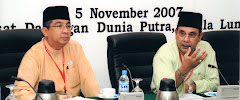
Eyeing Noramfaizul at work in 2007

Al Fatihah, didoakan pengorbanan Allahyarham diberkati ALLAH dan di shahidkan

Eyeing the picture with Adibah Amin

With Adibah Amin from left: Aishah, Azizulhasni, Naim, Rizal Hashim and Abu Bakar Atan

Saturday, September 3, 2011

Eyeing what the two monkeys up to

Here we are, monkey 1 and monkey 2

Promoting Coca Cola

Drinking Coca Cola

Saturday, August 27, 2011

Eyeing the ten cancer signals

10 Cancer signals
FOR some women, cancer comes hand-in-hand with another syndrome: denial. They may not want to face the reality that they have cancer, or may not want to go through treatment because they think they are doomed to death anyway.
In some cases, denial starts early on at the symptom stage, because they may not even want to consider that it could be cancer at all.
When women neglect to pay attention to cancer symptoms out of denial, fear or ignorance, they could be missing out on a valuable opportunity to detect cancer and treat it early.
Since there are so many different types of cancers that could affect us, the symptoms vary widely between different conditions and different people as well. There are also many instances where cancers do not produce symptoms at all, or symptoms only appear at late stages.
However, we can easily identify about 10 symptoms that should immediately send up warning flags in our minds and prompt us to seek medical advice. These symptoms can be easily mistaken for other conditions or as benign symptoms, but you shouldn't be so quick to shrug them off without proper medical advice.
I will explain each of these 10 symptoms below.
#1: Unexplained weight loss
Say you haven't been exercising more than usual lately, or have not even been exercising at all. Or you haven't gone on a diet and have been eating the amounts that you usually do. Yet you've been steadily losing a significant amount of weight, for instance 4kg or 5kg within a month.
This kind of unexplained weight loss is not necessarily a reason to be happy. It could be a sign of cancer, especially cancer of the colon or other parts of the digestive system.
You should see your doctor and provide as much details as possible about when you began losing weight and how much you have lost. Your doctor will conduct some tests to rule out an overactive thyroid and ask you to undergo CT scans to look at your internal organs.


#2: Bloating
Bloating is something that most women have become used to. We experience bloating at some point or other in our lives, whether due to PMS, water retention, or indigestion.
If you start to experience bloating that is unusual and not related to your menstrual cycle, you should start to pay close attention to what's happening. Are you so bloated that your jeans, trousers or skirts can't fit? Did it appear suddenly and is now occurring regularly over a few weeks?
Is the bloating accompanied by pain or tenderness in the abdomen or pelvis? Do you constantly feel full and unable to eat, even though you haven't eaten much?
All these signs have been known to occur in women with ovarian cancer. If you experience any of the above, it would be wise to see a doctor to check your ovaries because this type of cancer is difficult to detect in the early stages.
If you are able to catch it early, your chances of a better outcome are higher.
#3: Unusual bleeding
Any instance of vaginal bleeding that is out of the ordinary should be cause for concern. As a woman, you should know your body and your monthly cycle well enough to be familiar with when you should bleed, how much bleeding you experience, and how you feel.
Basically, you should not ignore any bleeding that is abnormal from what you normally have. If you have very regular cycles, but suddenly experience bleeding or spotting between periods, then it is abnormal.
If you usually have light flows, but suddenly have heavy and painful periods, then you should also have it checked out.
Other symptoms that may accompany unusual bleeding are unpleasant odours or discharge, bleeding after intercourse or blood in the urine. All these types of unusual bleeding should be checked out because they could be signs of cervical or uterine cancers.
Bleeding may also originate from the gastrointestinal tract or parts of the urinary system, such as the bladder or kidney.
If you discover blood in your urine or your stool, it could be due to a number of things, such as haemorrhoids, or blood from the vagina. But it could also be a sign of bladder, kidney or colorectal cancer, so you should see a doctor to rule these out.
Bladder, kidney or colon cancer can also trigger symptoms like changes in bowel and bladder habits. You should be concerned if you develop unusual bowel and bladder movements, such as continual constipation, diarrhoea or stomach aches. More frequent urination, or pain during urination or during a bowel movement, are also worrying signs.
Finally, if you cough up blood more than once, you should also get medical advice.
#4: Breast changes
The breasts hold a lot of clues for women. We've been told countless times that we need to know our breasts intimately and examine them once a month for lumps and other changes within the breasts, on the surface of the skin, as well as on and around the nipples.
Redness and thickening of the skin on the breasts should be looked at immediately as this could indicate inflammatory breast cancer, which is a very rare but aggressive form of breast cancer. A rash, flaking of the skin, or itchiness that persists over weeks should also be examined.
Changes to the skin surface may also include swelling, dimples, puckerings or rough spots.
Observe your nipples as well and look for changes in appearance that are not normal. If your nipples suddenly start producing discharge (if you aren't breastfeeding), become flattened, or turn in or out (contrary to what it usually is), it is best to see your doctor or gynaecologist.
#5: Skin changes
Changes in your skin texture, warts, moles or pigmentation, are well-known signs of skin cancer.
Melanoma is a common type of skin cancer and has symptoms like spots on your skin that have unusual changes in colour, size, shape or border. If certain spots on your skin appear to be funny-looking or different from your usual skin pigmentation, get it checked out.
Look out for moles or warts that change, such as growing excessively, sprouting hair, or changing colour or shape. Be wary if you suddenly develop bleeding on your skin or excessive scaling too. Observe the changes for one or two weeks, and if they persist, see your family doctor or a skin specialist.
#6: Difficulty swallowing and constant indigestion
Have you found it difficult to swallow your food lately? If you feel as if food is always caught in your throat when you eat, take note of this, as it could be a symptom of oesophageal or throat cancer.
Repetitive indigestion, not linked to pregnancy or any other apparent reason, is also a red flag. If you constantly feel nauseous, discomfort or a burning feeling in your upper abdomen, or vomit blood, you could be showing early signs of oesophageal, stomach or throat cancer.
#7: Persistent pain, fever or cough
These are three of the most vague and common symptoms that accompany many illnesses. It is extremely difficult to pinpoint them to cancer or any particular condition, but they are also not to be ignored or neglected.
Unexplained pain, in any part of the body, may point to some cancers. If it persists over a period of time, and cannot be attributed to any obvious physical wounds or conditions, then you should see your doctor and describe it in as much detail as possible.
Take note of when the pain arises, what kind of pain it is, and what exacerbates it.
A fever is often a sign of an infection, like influenza or some other viral or bacterial infection, but it can also point to certain types of cancer. The American Cancer Society says that fever is one of the symptoms that occur with early blood cancers such as leukaemia or lymphoma.
Of course, you do not have to run to your doctor in fear every time you have a fever. The point is that unexplained and prolonged fever needs to be examined, not ignored.
A very prolonged cough (one that lasts more than three or four weeks) that is unrelated to a cold or influenza, should also be noted. If lung cancer is suspected, especially if you are a smoker, your doctor should examine your throat, check your lung functioning and ask for X-rays.
#8: Swollen lymph nodes
Your lymph nodes are found in the sides of your neck, under your armpits, and around the groin area. Usually, they may become mildly swollen if you have an infection, and will subside once the infection has been treated or healed.
However, if the lymph nodes get progressively larger for more than a month, or develop lumps that do not go away, and are not related to a treatable infection, then the concern may be that it is linked to cancer, such as blood and lymphatic cancers.
#9: Mouth changes and sores
If you smoke or used to, you should look out for signs of oral cancer. Symptoms include white patches in the mucosa of the mouth, white spots on the tongue, or sores on the lips or in the mouth.
Other sores on the skin and genital area that won't heal, or cause excessive bruising or bleeding, should also be examined by a doctor.
#10: Fatigue and weakness
Finally, we come to the last potential symptom of cancer that is most commonly ignored - fatigue. Obviously, fatigue is such an everyday symptom of so many conditions that we cannot jump to the conclusion that it must be caused by cancer.
However, fatigue caused by cancer will probably be unlike the usual tiredness that you experience after a long day at work. It may plague you even when you have had sufficient rest or have not exerted yourself. It will be prolonged, unabated by rest, and may be accompanied by unexplained weakness.
You will realise that the 10 signs and symptoms described above are very subtle and vague indications of a problem. It is not easy to distinguish symptoms of cancer, and you should not work yourself up into a panic just because you suddenly have a mole on your arm or you are feeling a little tired.
Just keep in mind that if these symptoms persist, or appear without due cause, then it is a good idea to discuss your concerns with your doctor. It could be nothing, but it could also save your life.

Wednesday, August 24, 2011

Eyeing the Malaysian Integrity Institute

Datuk Naim Mohamad addressing the workshop on Understanding Corporate Integrity