Malaysia's Tenth Prime Minister

Malaysia's Tenth Prime Minister
YAB Dato' Seri Anwar Ibrahim

Saturday, July 11, 2009

Eyeing Kamarul's views on Najib

Glimpses of Najib's diplomatic touch

2009/07/11

Echoing his economic liberalisation and other innovative domestic initiatives, Prime Minister Datuk Seri Najib Razak’s world view reveals itself to be expansive, opportunity-driven and unflinching of a brave new tomorrow, writes KAMRUL IDRIS

REPORTERs covering Thai Prime Minister Abhisit Vejjajiva's one-day visit to Malaysia last month would have had the feeling that they had seen this movie before.

Apart from a very different cast of characters, the plot was almost exactly the same as Tun Abdullah Ahmad Badawi's trip to Bangkok in February 2007 -- when both countries knocked heads together to find solutions to the troubles in Thailand's southern provinces.

Leadership changes always produce question marks over what went on before, but in his first 100 days in office, Prime Minister Datuk Seri Najib Razak had to provide an excess of reassurance that Malaysia's famous continuity in its kinship with friends and neighbours had not been pushed off a cliff.

Scripts had to be replayed, just to be on the safe side, to compensate for Putrajaya's disappearance from the international and regional stages in the transition to a new government.

After 13 months of an attention deficit in foreign policy since the March 2008 general election, the country's interlocutors were relieved that there was at last someone alive and awake at the wheel.

In the joint press conference between Najib and Susilo Bambang Yudhoyono in Jakarta in May, the Indonesian president was pleased to say that "what we have been doing, we will continue to do to seek agreement on new opportunities to yield concrete results for our two countries".

The Indonesians had elevated Najib's short stay to a full official visit, complete with guard of honour, booming cannonade and big hoardings of the presidential and prime-ministerial couples.

Circumlocution aside, Susilo was glad to know that his closeness to Abdullah would be repeated in a rapport with Najib. Amid territorial disputes, cultural contestations and the running sore of millions of mistreatable migrant workers, a personal bond between their leaders may be the only thing preventing Malaysia-Indonesia ties from falling apart.

As the Jalur Gemilang fluttered in Tiananmen Square a month later, Najib again had to hearten his hosts that the promises made under the Abdullah administration, particularly in respect of the Second Penang Bridge and other commercial dealings, would be kept.

China was the highlight of Najib's itinerary over the 100 days, revealing the new prime minister's diplomatic touch to be deft and sure. He was not just the son following in his father's footsteps, smiling at parades and banquets, and posing for the front page of the China Daily with his family around a rare photograph of Tun Abdul Razak Hussein signing the communique to establish relations 35 years before.

As has become tradition for Malaysian premiers, Najib took up the job of the country's top salesman with gusto. He charmed the business crowds, played on the poignancy of his father's legacy, answered queries and lent a hand in the entrepreneurial networking between the two countries.

In an old civilisation where face, subtlety and nuance matter, Chinese Premier Wen Jiabao did Malaysia the signal honour of holding bilateral talks in the Great Hall of the People -- the gilded scene of Razak's conferences with Zhou Enlai but which was no longer used for such purposes.

Extensively covered at home, Najib's China visit proved that the government was in the driver's seat, able to conduct its external affairs without the distraction of domestic uncertainty.

It did not start well for him, however. Najib's first time out of the country as prime minister was to the aborted Asean Summit in Pattaya, where he along with other heads of government had to leave in a hurry as demonstrators gatecrashed the Thai resort venue.

But the journey was not wasted. He had a few words with Singapore counterpart Lee Hsien Loong to lay the ground for their meeting as part of the prime minister's introductory tour of his Asean comrades in late May.

Like Abdullah, Najib wanted a paradigm shift in relations with Singapore, away from the fixation with one-sided bridges over the straits and non-sales of sand. But unlike Abdullah's golf rounds and durian picnics, Najib was more business-minded, more forward-looking and keener on fresh mechanisms for the sticking points of the past.

The paradigm-shifting was not pursued merely as a better alternative to twiddling thumbs. Najib is worried about the global economic crisis and its blast on Malaysia -- a five per cent contraction in this year's gross domestic product, plummeting foreign investment and exports, rising unemployment.

He softened his hard-nosed pragmatism with the cliche "win-win situation", but the calculation was to save the country from recession by opening its doors wider to business and investment.

To the west, a bigger paradigm waits to be budged. Malaysia's links with the United States had been freighted by politics across eight years of a right-wing Republican regime made a bit crazy by the Sept 11, 2001 terrorist attacks.

It would be foolish petulance to now ignore Barack Obama's outreach across the chasm created by George W. Bush. Najib hit it off in a phone call with America's inaugural black president on June 27 as the first Malaysian leader in a long while to be able to touch base with Uncle Sam without ambivalence.

In the glimpses of it so far, Najib's foreign policy is being shaped less by doctrine and ideology than by work rate and an openness to innovative approaches.

Like his economic liberalisation and other domestic initiatives, the sixth prime minister's world view is revealing itself to be expansive, opportunity-driven and unflinching of a brave new tomorrow.

kamrul@nst.com.my

Friday, June 5, 2009

Eyeing Regina Bretts 45 lessons

Written By Regina Brett, 90 years old, of The Plain Dealer, Cleveland, Ohio :

"To celebrate growing older, I once wrote the 45 lessons life taught
me. It is the most-requested column I've ever written. My odometer
rolled over to 90 in August, so here is the column once more:"

1. Life isn't fair, but it's still good.
2. When in doubt, just take the next small step.
3. Life is too short to waste time hating anyone.
4. Your job won't take care of you when you are sick. Your friends and
parents will. Stay in touch.
5. Pay off your credit cards every month.
6. You don't have to win every argument. Agree to disagree.
7. Cry with someone. It's more healing than crying alone.
8. It's OK to get angry with God. He can take it.
9. Save for retirement starting with your first paycheck.
10. When it comes to chocolate, resistance is futile.
11. Make peace with your past so it won't screw up the present.
12. It's OK to let your children see you cry.
13. Don't compare your life to others. You have no idea what their
journey is all about.
14. If a relationship has to be a secret, you shouldn't be in it.
15. Everything can change in the blink of an eye. But don't worry; God
never blinks.
16. Take a deep breath. It calms the mind.
17. Get rid of anything that isn't useful, beautiful or joyful.
18. Whatever doesn't kill you really does make you stronger.
19. It's never too late to have a happy childhood. But the second one
is up to you and no one else.
20. When it comes to going after what you love in life, don't take no
for an answer.
21. Burn the candles, use the nice sheets, wear the fancy lingerie.
Don't save it for a special occasion. Today is special.
22. Over prepare, then go with the flow.
23. Be eccentric now. Don't wait for old age to wear purple.
24. The most important sex organ is the brain.
25. No one is in charge of your happiness but you.
26. Frame every so-called disaster with these words ''In five years,
will this matter?".
27. Always choose life.
28. Forgive everyone everything.
29. What other people think of you is none of your business.
30. Time heals almost everything. Give time, time.
31. However good or bad a situation is, it will change.
32. Don't take yourself so seriously. No one else does.
33. Believe in miracles.
34. God loves you because of who God is, not because of anything you
did or didn't do.
35. Don't audit life. Show up and make the most of it now.
36. Growing old beats the alternative -- dying young.
37. Your children get only one childhood.
38. All that truly matters in the end is that you loved.
39. Get outside every day. Miracles are waiting everywhere.
40. If we all threw our problems in a pile and saw everyone else's,
we'd grab ours back.
41. Envy is a waste of time. You already have all you need.
42. The best is yet to come.
43. No matter how you feel, get up, dress up and show up.
44. Yield.
45. Life isn't tied with a bow, but it's still a gift.

Tuesday, June 2, 2009

Eyeing the dont's while sleeping


1 - DON'T SLEEP WITH WATCH

Watches can emit a certain level of radioactivity. Though small, but if you wear your watch to bed for a long time, it might have adverse effects on your health.


2 - DON'T SLEEP WITH BRA

Scientists in America have discovered those that wear bras for more than 12 hours have a higher risk of getting breast cancer. So go to bed without it.


3 - DON'T SLEEP WITH PHONE

Putting the phone beside your bed or anywhere near you is not encouraged. Though some of us will use phones as alarm clocks, but please put the phone as far as possible. Scientists have proved that electrical items including mobile phone and television sets emit magnetic waves when used. These waves can cause disruptions to our nervous system. Therefore if you need to put your mobile phone near you, switch it off first.


4 - DON'T SLEEP WITH MAKE UP

People who sleep with make up might have skin problems in the long run. Sleeping with make up will cause the skin to have difficulty in breathing and problem in perspiring. You will also need a much longer time to go into deep sleep.


Lastly.....


5 - DON'T SLEEP WITH OTHERS' WIFE / HUSBAND

You may never wake up again. : )

Thursday, May 21, 2009

Obama on healthcare

Naim --

The chance to finally reform our nation's health care system is here. While Congress moves rapidly to produce a detailed plan, I have made it clear that real reform must uphold three core principles -- it must reduce costs, guarantee choice, and ensure quality care for every American.

As we know, challenging the status quo will not be easy. Its defenders will claim our goals are too big, that we should once again settle for half measures and empty talk. Left unanswered, these voices of doubt might yet again derail the comprehensive reform we so badly need. That's where you come in.

When our opponents spread fear and confusion about the changes we seek, your support for these core principles will show clarity and resolve. When the lobbyists for the status quo tell Congress to hold back, your personal story will give them the courage to press forward.

Join my call: Ask Congress to pass real health care reform in 2009.

After adding your name, please consider sharing your personal story about the importance of health care reform in your life and the lives of those you love.
I will be personally reviewing many of these signatures and stories. If you speak up now, your voice will make a difference.

http://my.barackobama.com/HealthCareOrganizing

American families are watching their premiums rise four times faster than their wages. Spiraling health care costs are shackling America's businesses, curtailing job growth and slowing the economy at the worst possible time. This has got to change.

I know personal stories can drive that change, because I know how my mother's experience continues to drive me. She passed away from ovarian cancer a little over a decade ago. And in the last weeks of her life, when she was coming to grips with her own mortality and showing extraordinary courage just to get through each day, she was spending too much time worrying about whether her health insurance would cover her bills. She deserved better. Every American deserves better. And that's why I will not rest until the dream of health care reform is finally achieved in the United States of America.

Please add your name to join my call. Then share your personal story about why you too will not rest until this job is done.

http://my.barackobama.com/HealthCareOrganizing

Last November, the American people sent Washington a clear mandate for change. But when the polls close, the true work of citizenship begins. That's what Organizing for America is all about. Now, in these crucial moments, your voice once again has extraordinary power. I'm counting on you to use it.

Thank you,

President Barack Obama

Monday, May 18, 2009

Eyeing Blood groups and fruits


Did You Know?


Blood type and Rh
How many people have it?
O +
40 %
O -
7 %
A +
34 %
A -
6 %
B +
8 %
B -
1 %
AB +
3 %
AB -
1 %


MOST IMPORTANT INFO NOW:

You Can Receive
If Your Type Is
O-
O+
B-
B+
A-
A+
AB-
AB+
AB+
YES
YES
YES
YES
YES
YES
YES
YES
AB-
YES

YES

YES
YES


A+
YES
YES


YES
YES


A-
YES


YES


B+
YES
YES
YES
YES


B-
YES

YES


O+
YES
YES


O-
YES


KNOW ABOUT THE BENEFITS OF HAVING FRUITS AND VEGETABLES


Fruit
Benefit
Benefit
Benefit
Benefit
Benefit

apples
Protects your heart
prevents constipation
Blocks diarrhea
Improves lung capacity
Cushions joints

apricots
Combats cancer
Controls blood pressure
Saves your eyesight
Shields against Alzheimer's
Slows aging process

artichokes
Aids digestion
Lowers cholesterol
Protects your heart
Stabilizes blood sugar
Guards against liver disease

avocados
Battles diabetes
Lowers cholesterol
Helps stops strokes
Controls blood pressure
Smoothes skin

bananas
Protects your heart
Quiets a cough
Strengthens bones
Controls blood pressure
Blocks diarrhea

beans
Prevents constipation
Helps hemorrhoids
Lowers cholesterol
Combats cancer
Stabilizes blood sugar

beets
Controls blood pressure
Combats cancer
Strengthens bones
Protects your heart
Aids weight loss

blueberries
Combats cancer
Protects your heart
Stabilizes blood sugar
Boosts memory
Prevents constipation

broccoli
Strengthens bones
Saves eyesight
Combats cancer
Protects your heart
Controls blood pressure

cabbage
Combats cancer
Prevents constipation
Promotes weight loss
Protects your heart
Helps hemorrhoids

cantaloupe
Saves eyesight
Controls blood pressure
Lowers cholesterol
Combats cancer
Supports immune system

carrots
Saves eyesight
Protects your heart
Prevents constipation
Combats cancer
Promotes weight loss

cauliflower
Protects against Prostate Cancer
Combats Breast Cancer
Strengthens bones
Banishes bruises
Guards against heart disease

cherries
Protects your heart
Combats Cancer
Ends insomnia
Slows aging process
Shields against Alzheimer's

chestnuts
Promotes weight loss
Protects your heart
Lowers cholesterol
Combats Cancer
Controls blood pressure

chili peppers
Aids digestion
Soothes sore throat
Clears sinuses
Comba= ts Cancer
Boosts immune system

figs
Promotes weight loss
Helps stops strokes
Lowers cholesterol
Combats Cancer
Controls blood pressure

fish
Protects your heart
Boosts memory
Protects your heart
Combats Cancer
Supports immune system

flax
Aids digestion
Battles diabetes
Protects your heart
Improves mental health
Boosts immune system

garlic
Lowers cholesterol
Controls blood pressure
Combats cancer
kills bacteria
Fights fungus


Friday, May 8, 2009

Eyeing an important John Hopkins Update

John Hopkins Update - Good article

AFTER YEARS OF TELLING PEOPLE CHEMOTHERAPY IS THE ONLY WAY TO TRY ('TRY', BEING THE KEY WORD) TO ELIMINATE CANCER, JOHNS HOPKINS IS FINALLY STARTING TO TELL YOU THERE IS AN ALTERNATIVE WAY.

Cancer Update from Johns Hopkins :

1. Every person has cancer cells in the body. These cancer cells do not show up in the standard tests until they have multiplied to a few billion. When doctors tell cancer patients that there are no more cancer cells in their bodies after treatment, it just means the tests are unable to detect the cancer cells because they have not reached the detectable size.

2. Cancer cells occur between 6 to more than 10 times in a person's lifetime.

3 When the person's immune system is strong the cancer cells will be destroyed and prevented from multiplying and forming tumors.

4. When a person has cancer it indicates the person has multiple nutritional deficiencies. These could be due to genetic, environmental, food and lifestyle factors.

5. To overcome the multiple nutritional deficiencies, changing diet and including supplements will strengthen the immune system.

6. Chemotherapy involves poisoning the rapidly-growing cancer cells and also destroys rapidly-growing healthy cells in the bone marrow, gastrointestinal tract etc, and can cause organ damage, like liver, kidneys, heart, lungs etc.

7. Radiation while destroying cancer cells also burns, scars and damages healthy cells, tissues and organs.

8. Initial treatment with chemotherapy and radiation will often reduce tumor size. However prolonged use of chemotherapy and radiation do not result in more tumor destruction.

9. When the body has too much toxic burden from chemotherapy and radiation the immune system is either compromised or destroyed, hence the person can succumb to various kinds of infections and complications.

10. Chemotherapy and radiation can cause cancer cells to mutate and become resistant and difficult to destroy. Surgery can also cause cancer cells to spread to other sites.

11. An effective way to battle cancer is to starve the cancer cells by not feeding it with the foods it needs to multiply.

CANCER CELLS FEED ON:

a. Sugar is a cancer-feeder. By cutting off sugar it cuts off one important food supply to the cancer cells. Sugar substitutes like NutraSweet, Equal, Spoonful, etc are made with Aspartame and it is harmful. A better natural substitute would be Manuka honey or molasses but only in very small amounts. Table salt has a chemical added to make it white in color. Better alternative is Bragg's aminos or sea salt..


b. Milk causes the body to produce mucus, especially in the gastro-intestinal tract. Cancer feeds on mucus. By cutting off milk and substituting with unsweetened soy milk cancer cells are being starved.

c. Cancer cells thrive in an acid environment. A meat-based diet is acidic and it is best to eat fish, and a little chicken rather than beef or pork. Meat also contains livestock antibiotics, growth hormones and parasites, which are all harmful, especially to people with cancer.

d. A diet made of 80% fresh vegetables and juice, whole grains, seeds, nuts and a little fruits help put the body into an alkaline environment. About 20% can be from cooked food including beans. Fresh vegetable juices provide live enzymes that are easily absorbed and reach down to cellular levels within 15 minutes to nourish and enhance growth of healthy cells. To obtain live enzymes for building healthy cells try and drink fresh vegetable juice (most vegetables including bean sprouts) and eat some raw vegetables 2 or 3 times a day. Enzymes are destroyed at temperatures of 104 degrees F (40 degrees C).

e. Avoid coffee, tea, and chocolate, which have high caffeine. Green tea is a better alternative and has cancer fighting properties.. Water-best to drink purified water, or filtered, to avoid known toxins and heavy metals in tap water. Distilled water is acidic, avoid it.

12. Meat protein is difficult to digest and requires a lot of digestive enzymes. Undigested meat remaining in the intestines becomes putrefied and leads to more toxic buildup.


13. Cancer cell walls have a tough protein covering. By refraining from or eating less meat it frees more enzymes to attack the protein walls of cancer cells and allows the body's killer cells to destroy the cancer cells.

14. Some supplements build up the immune system (IP6, Flor-ssence, Essiac, anti-oxidants, vitamins, minerals, EFAs etc.) to enable the bodies own killer cells to destroy cancer cells.. Other supplements like vitamin E are known to cause apoptosis, or programmed cell death, the body's normal method of disposing of damaged, unwanted, or unneeded cells.

15. Cancer is a disease of the mind, body, and spirit. A proactive and positive spirit will help the cancer warrior be a survivor. Anger, un-forgiveness and bitterness put the body into a stressful and acidic environment. Learn to have a loving and forgiving spirit. Learn to relax and enjoy life.

16. Cancer cells cannot thrive in an oxygenated environment. Exercising daily, and deep breathing help to get more oxygen down to the cellular level. Oxygen therapy is another means employed to destroy cancer cells.

1. No plastic containers in micro.

2. No water bottles in freezer.

3. No plastic wrap in microwave.

Johns Hopkins has recently sent this out in its newsletters. This information is being circulated at Walter Reed Army Medical Center as well. Dioxin chemicals cause cancer, especially breast cancer. Dioxins are highly poisonous to the cells of our bodies. Don't freeze your plastic bottles with water in them as this releases dioxins from the plastic. Recently, Dr. Edward Fujimoto, Wellness Program Manager at Cast le Hospital, was on a TV program to explain this health hazard. He talked about dioxins and how bad they are for us. He said that we should not be heating our food in the microwave using plastic containers. This especially applies to foods that contain fat.. He said that the combination of fat, high heat, and plastics releases dioxin into the food and ultimately into the cells of the body. Instead, he recommends using glass, such as Corning Ware, Pyrex or ceramic containers for heating food You get the same results, only without the dioxin. So such things as TV dinners, instant ramen and soups, etc., should be removed from the container and heated in something else. Paper isn't bad but you don't know what is in the paper. It's just safer to use tempered glass, Corning Ware, etc. He reminded us that a while ago some of the fast food restaurants moved away from the foam containers to paper. The dioxin problem is one of the reasons.

Also, he pointed out that plastic wrap, such as Saran, is just as dangerous when placed over foods to be cooked in the microwave. As the food is nuked, the high heat causes poisonous toxins to actually melt out of the plastic wrap and drip into the food. Cover food with a paper towel instead.

This is an article that should be sent to anyone important in your life.

Monday, March 30, 2009

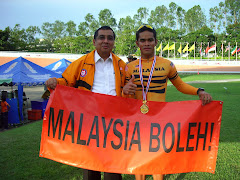
Eyeing Mohd Azizulhasni's achievement

Mohd Azizulhasni Awang, silver medallist Sprint
World Cycling Championship 2009 Pruszkow,Poland.

Tuesday, February 3, 2009

Eyeing the economy

Malaysia: Waiting for Bounce Back

2 February 2009

As the effects of the global financial crisis continue to ripple through stock markets around the world, the Malaysian bourse appears volatile but better placed to ride out the storm than it did during the 1997 Asian financial crisis.

In line with most Asian stock markets Malaysian capital markets have fallen victim to ongoing global deleveraging and flight to safety. The Kuala Lumpur Composite Index (KLCI) dropped 39% in 2008 from 1432 at the end of 2007.

The KLCI did rise by 3.9% earlier in the year, but that rally proved to be somewhat short- lived. The benchmark KLCI has since been steadily declining, falling below the 900-level in mid-January. Meanwhile, the industrial production index fell to a four-year low in November 2008 to 128.9, compared to 139.7 a year earlier.

The sectors that saw sharp sell offs on the KLCI are plantation, property, construction and banking. Among the most affected companies are Sime Darby, Kuala Lumpur Kepong, and IOI Corp - which reported its lowest close since 2008 at RM3.78 on January 14.

Holdings have decreased across the board. Maybank eased 10% to RM5.50. Bumiputra-commerce, went down 30% to RM6.45 while Tenaga Nasional, the largest electricity utility company in Malaysia has also suffered, decreasing 20% to RM6.20.

These difficulties have been compounded by an outflow of foreign investment following the March 2008 general elections. By the third quarter of 2008, foreign investors were eager to liquidate their Malaysian assets. According to Malaysia's RHB Research Institute, foreign ownership of Malaysian stocks is currently estimated at below 20%. However, Malaysian bankers told OBG that they expect this number to rebound to its previous highs of between 20 and 30% in the foreseeable future.

The economic downturn has also taken its toll on the local currency, the ringgit, which has been subject to steep currency swings against foreign currencies, namely the US dollar, the yen, the euro, and the British sterling. In April 2008 the ringgit reached a 10-year high of 3.12 against the dollar due to strong economic growth, large portfolio inflows and rising prices of crude and palm oil. However, from May onwards, the exchange rate dropped along with falling commodity prices and the onset of the subprime credit crisis, which led to an increased demand for US dollar assets, according to the Kenanga Investment Bank's "Economic Outlook 2009."

The Malaysian Rating Corporation predicts that the ringgit could devalue further to between 3.55 and 3.70 against the dollar at some point in the first half of 2009. Conversely, RAM Holdings' Chief Economist Yeah Kim Leng believes that the ringgit is underpinned by both strong levels of trade surplus and international reserves. According to the Statistics Department, the trade surplus rose from RM9.6bn ($2.65bn) in October 2008 to RM11.49bn ($3.18bn) in November 2008, exhibiting the 133rd consecutive month of trade surplus. Meanwhile, the nation's international reserves stood at RM330.8bn ($91.48bn) as of January 15, 2009, according to the Malaysian Central Bank.

On the upside, fluctuations in the Malaysian market could prove worth the pain, as they present opportunities for investors. With stocks trading at record lows, it is arguably the best time for investors to buy shares. According to Colbert Nocom, a UBS Investment research analyst, the investors in the Malaysian market are looking forward to 2010 as companies begin to show sharp rebounds in their earnings.

As Malaysia is bracing itself for confronting rapidly weakening economic conditions, the government has unveiled two unprecedented stimulus packages. The first stimulus package of 7bn ringgit ($1.9bn) was announced last November, and is being rolled out in stages in the first quarter of this year to alleviate the pain. The second remains in the pipeline and is expected to boost domestic growth and improve confidence. Deputy Prime Minister Najib Razak said it is intended to "avoid falling into a recession and sustain our economic livability". A major aim of the emergency aid is expected to be to support the manufacturing and construction sectors.

In addition these rescue packages, Malaysia's financial sector is benefiting from strong fundamentals. According to Razak, the capital adequacy ratio of banks stands at 8%, higher than the international requirement; non-performing loans of banks average 2.5%; foreign reserves amount to $100.2bn; and the current account surplus is 15% of GDP.Based on this, Yeonzon Yeow, Head of Research at Kenanga Investment Bank in Kuala Lumpur, told OBG he believes "the Malaysian market will recover sooner than others."

Friday, January 23, 2009

Eyeing the colon

Constipation and natural treatment

Quote: 99.9 % of our illness begins in the colon – Prof. Arnold Ehret

Constipation refers to unduly infrequent or irregular bowel movements, with difficulty, and sometimes pain on passing dry hard faeces. It is usually harmless but may be an indication of an underlying disorder. Many people only have one bowel movement each day and sometimes even less than this. The ideal should be 2 or 3 bowel movements each day which approximates to a bowel movement for each meal consumed.
There are many severe health problems connected with periods of lengthy constipation. Studies have now shown that cancer of the intestinal tract and poor absorption of nutrients can stem from periods of constipation.
One of the main causes of constipation is diet. While there are many other contributing factors like immobility, haemorrhoids, an anal fissure, hypothyroidism or hormonal changes like those in pregnancy, diet does play a large role in constipation. Most commonly it is a diet lacking in fibre.
The sad fact is that most people would not need laxatives if they ate right. Unfortunately, artificial laxatives can contain harmful chemicals which could have side-effects over time.
Eating incorrectly can have long-term effects. One may not notice it when younger, but over a few years too many meats, fats and dairy products will result in constipation.
The modern diet too often consists of fast food, high processed foods and the fresh fruit and vegetables fall away, to your detriment. Continual constipation does require a change in life style. Every whole grain item and every fibre-rich fruit and vegetable helps prevent and relieve constipation.
Foods that have special recognition as laxatives include almonds, apricots (dried), avocados, chicory, coconut, dandelion (yes get out in your garden and eat those dandelion leaves, so long as they have no chemicals on them!), dates, endive, figs, flaxseed, grapes, mango's, olive, papayas, parsley, persimmons, pineapple, prunes, rhubarb, soybeans, turnips, walnuts, watercress.
Include a combination of these in your diet as fresh salads, soups or snacks. Increase your intake of the above and if still constipated, increase again and lessen your intake of meat, dairy and high processed food.
Lack of water in your system is a large contributing factor to constipation. Water is essential to many bodily actions and elimination of waste is very high on the list. NOT tea, coffee or soft drink, but pure WATER. Add some lemon or fresh fruit juice for flavour if needed, but drink water!
Juicing is a fantastic way of getting essential foods in a fast acting and refreshing way. A variety of delicious juices can be made if you have a juicing machine, alternatively fresh juices can be purchased. Avoid those made from concentrate and try to always buy organic juices. Prune juice is top of the list as a laxative, but apple-pear, asparagus and potato are also good.
Psyllium husks(**see below), the tiny seeds of the plantain, contain a fibre called mucilage. Mucilage absorbs a great deal of fluid in the gut, the seeds swell and add bulk to the stool. The bulk presses on the walls of the colon, inducing the muscles to contract and the stool is passed. It is very important to drink at least eight full glasses of water a day, or the digestive track will become blocked and uncomfortable. Psyllium also removes the sticky mucus and toxins from the bowel. They reduce acidity and increase urine flow.
Linseed also known as flax, is rich in fibre and essential fatty acids and can be used instead of psyllium husks. Again for the seeds to work effectively it is important for you to drink at least 1/4 pint (150 ml) of water per desert spoon of seeds.
Senna known to Arabian physicians as early as the ninth century as a food and dietary supplement, is an effective and long-established remedy for constipation. Senna contains a powerful natural laxative called anthraquinone. It is best combined with such things as ginger or cloves that will improve taste and prevent griping pains. Anthraquinone laxatives should not be taken over long periods of time as they are very strong, and you should not become dependent on them. Aloe Vera also falls within this category.
Rhubarb contains a natural laxative chemical. It is also high in fibre. Its laxative action can be pretty powerful. Liquorice in large doses can be a laxative. Olive oil has a mild laxative action and can lower blood cholesterol levels. Laxatives should never be abused. Use them for only as long as needed to let your body establish its own natural rhythm. Do not use constantly as you will become dependent on them and some may lose their potency as your body gets used to them. Always try to avoid harsh, artificial laxatives and use a natural one.
Copyright © 2002 - 2005 P. Topham:
U.S. Nutritional and Herbal Researcher - All Rights Reserved
www.organicn utrition. co.uk/articles/ constipation. Htm

Sunday, January 18, 2009

Eyeing some tests

Let's find out just how clever you really are....


First Question:

You are participating in a race. You overtake the second person. What position are you in?


Answer: If you answered that you are first, then you are absolutely wrong! If you overtake the second person and you take his
place, you are second!

Try not to screw up next time.

Now answer the second question,but don't take as much time as you took for the first question, OK ?

Second Question:
If you overtake the last person, then you are...?


Answer: If you answered that you are second to last, then you are wrong
again. Tell me, how can you overtake the LAST Person?

You're not very good at this, are you?


Third Question:
Very tricky arithmetic! Note: This must be done in your head only . Do NOT use paper and pencil or a calculator. Try it..


Take 1000 and add 40 to it. Now add another 1000 . Now add 30.
Add another 1000 . Now add 20 . Now add another 1000
Now add 10 . What is the total?


Did you get 5000 ?
The correct answer is actually 4100.
f you don't believe it, check it with a calculator!

Today is definitely not your day, is it?
Maybe you'll get the last question right....


Maybe.


Fourth Question:

Mary's father has five daughters: 1. Nana, 2. Nene, 3. Nini,4. Nono. What is the name of the fifth daughter?


Did you Answer Nunu?
NO! Of course it isn't.Her name is Mary. Read the question again!


Okay, now the bonus round:

A mute person goes into a shop and wants to buy a toothbrush. By
imitating the action of brushing his teeth he successfully
expresses himself to the shopkeeper and the purchase is
done.
Next, a blind man comes into the shop who wants to buy a pair of
sunglasses; how does HE indicate what he wants


He just has to open his mouth and ask....
It's really very simple.. Like you!